Weltrade doesn’t offer a single one-size-fits-all account. It offers several, each built around a different trading style, capital level, and experience range. Picking blind usually means picking wrong, so here’s a straight rundown of what’s actually available. Forex brokers can offer several types of trading accounts, with differences in trade size, execution model, pricing and account features. DailyForex provides a useful breakdown of the different types of forex trading accounts and how they differ.

To set up your Weltrade account you can start off here.
Micro Account
Designed for training purposes rather than long-term use, the Micro account is where many beginners take their very first live trades. It’s intentionally simple, with capped equity, which is why Weltrade itself recommends moving to Premium or Pro once you’re past the training stage. Think of it less as a permanent account and more as a supervised on-ramp.

Cent Account
The Cent account displays balance in cents rather than standard currency units, letting you trade with real market conditions at a fraction of typical cost exposure. Minimum deposit sits at $1, spreads start from 1.5 pips, and leverage runs up to 1:2000 with no commission charged. Symbols carry a “.C” suffix to distinguish them from standard instruments. It’s a genuinely useful account for testing strategies with real money on the line, just very little of it. For a deeper dive into two of the most commonly compared options, see our guide on Weltrade Cent vs Pro: Which Account Is Better.

Premium Account
Premium offers more flexibility and lower spreads than Micro, aimed at traders who’ve outgrown the training-account stage but aren’t yet trading at Pro-level volume. It’s a reasonable middle ground for developing traders scaling up their position sizes, without yet committing to the deposit levels that Pro or Raw Spread traders typically work with.

Pro Account
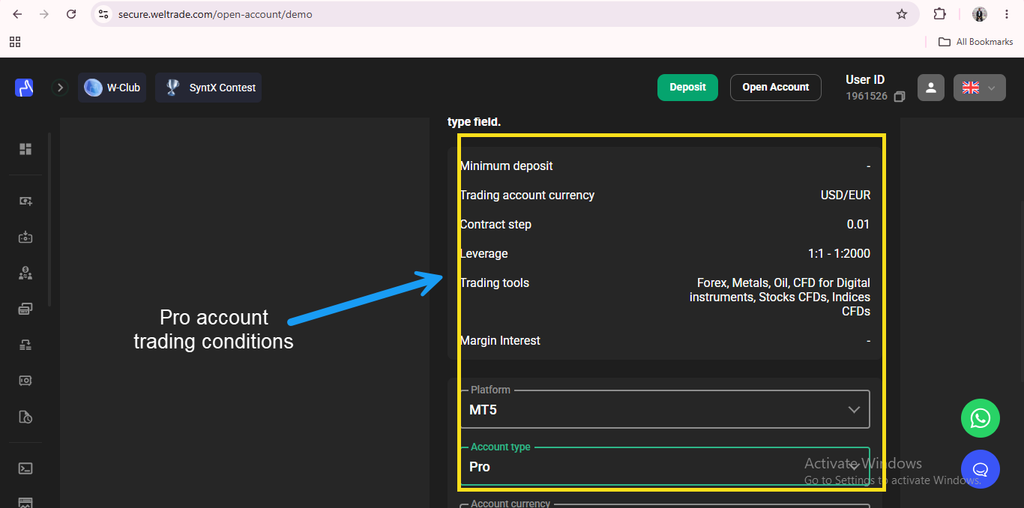
Built for experienced traders, Pro offers floating spreads from 0.5 pips, leverage up to 1:1000, and no added commission. Execution is market-based with fast average fill times, minimum position size starts at 0.01 lots, and equity is unlimited meaning it scales cleanly whether you’re running a modest account or a high-volume strategy. It’s the account most scalpers and algorithmic traders on Weltrade gravitate toward.
Raw Spread Account
Raw Spread accounts aim for minimal spreads with direct market access, appealing to traders who want pricing as close to raw interbank rates as possible. Like the other accounts, it starts with a low minimum deposit, making it accessible even though it’s designed with more experienced trading styles in mind. In the article What Is the Weltrade Raw Spread Account we explain more.
SyntX Account
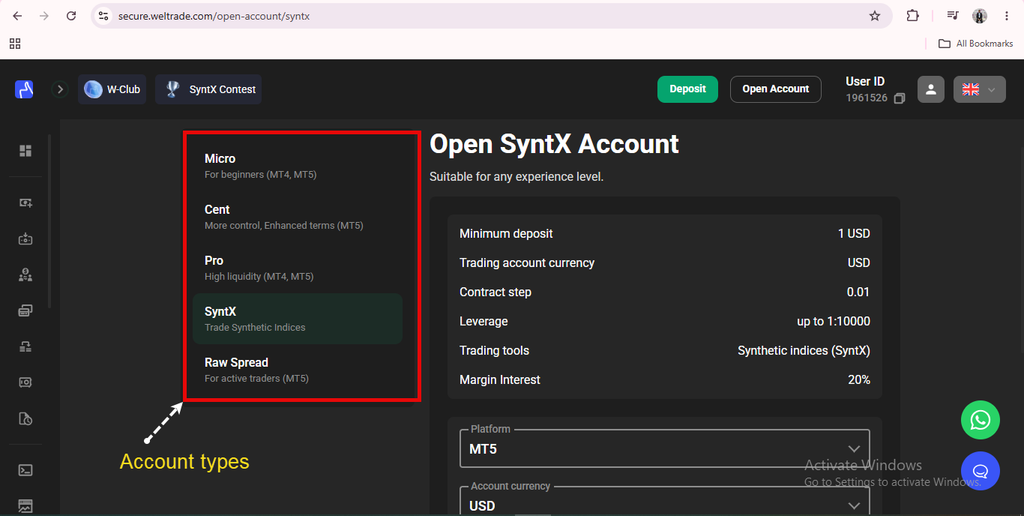
The outlier in the lineup, SyntX, doesn’t offer forex, metals, or crypto at all. Instead, it’s a dedicated gateway to synthetic indices, with fixed spreads, no commission, and leverage up to 1:10000. It’s less about experience level and more about whether you want exposure to continuously-trading, algorithm-driven instruments. A beginner interested in SyntX and a beginner interested in forex are really choosing two different markets, not two difficulty levels of the same one.
Choosing the Right One
The honest answer is that account choice depends on what you’re trading and how much capital you’re starting with, not which account “sounds” most advanced. Beginners testing strategies belong on Micro or Cent, developing traders fit Premium, experienced traders lean Pro or Raw Spread, and anyone interested in synthetic markets specifically needs SyntX.

Over and above trading, more and more traders are building their own communities and introducing traders to Weltrade via the Weltrade Partner Program. You could also earn additional income through this program.