If you’ve been trading on Weltrade’s Premium or Pro accounts and started wondering why your spread costs feel higher than what more experienced traders describe, the answer is often the same: they’re likely on a Raw Spread account, not Pro. Here’s what actually separates it from the rest of the lineup, and whether the switch is actually worth it for how you trade. A Raw Spread account uses a different pricing structure from a traditional spread-based account, with tighter spreads and a separate commission. TIOmarkets provides a useful explanation of how raw spreads work and how they affect the overall cost of a forex trade.
To fully explore all of Weltrade’s offerings create an account here.

What “Raw Spread” Actually Means
Most trading accounts hide their fee inside the price. The broker takes the real bank-to-bank price and adds a little extra on top. That extra amount is basically how they get paid. A “Raw Spread” account works differently. It gives you a price much closer to the real bank rate, with almost nothing added on top, so you’re trading nearer to the actual market price instead of a price the broker has adjusted.

Why Your Spreads Feel Different Here
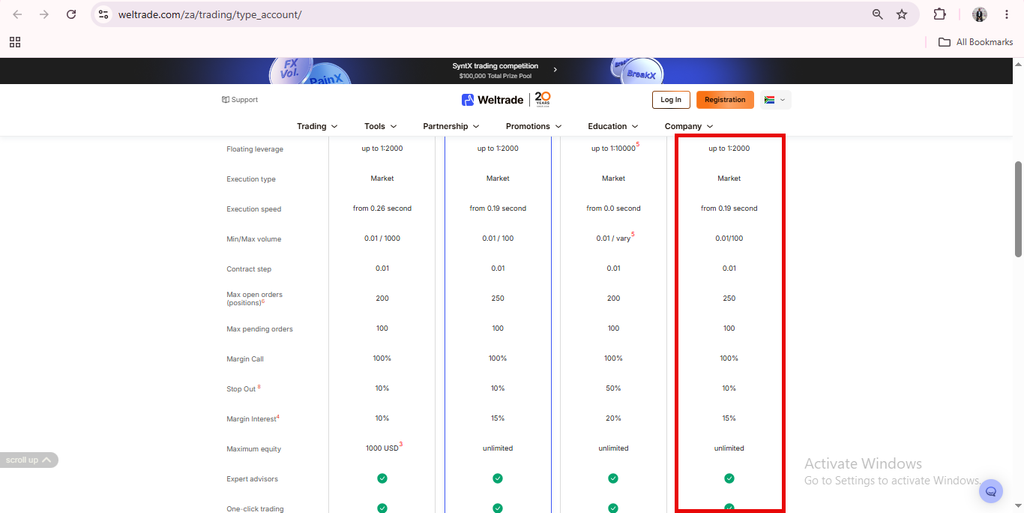
On Weltrade’s Raw Spread account, spreads can compress far tighter than on Premium or even Pro during normal conditions, because there’s less markup built in. This is the same logic behind ECN-style accounts at other brokers, the trade-off for tighter spreads is typically a commission per lot, which is worth checking against your typical trade volume before assuming it’s automatically cheaper. Run the math on your own trade frequency rather than assuming “raw” automatically beats “standard.” For a full comparison against Weltrade’s other options, see our guides on What Are Weltrade Trading Account Types

Who This Account Actually Serves
Raw Spread accounts tend to make the most sense for traders running higher volume or shorter-term strategies, scalpers and frequent intraday traders in particular, where even small spread differences compound meaningfully across dozens of trades. If you’re placing a handful of trades a week with longer hold times, the spread savings matter far less, and a simpler account structure like Premium or Pro may serve you just as well without adding commission calculations to track. There’s no prize for using the “professional-sounding” account if it doesn’t actually match your trading habits. In the guide Weltrade Cent vs Pro: Which Account Is Better we give a more detailed comparison.

Getting Started
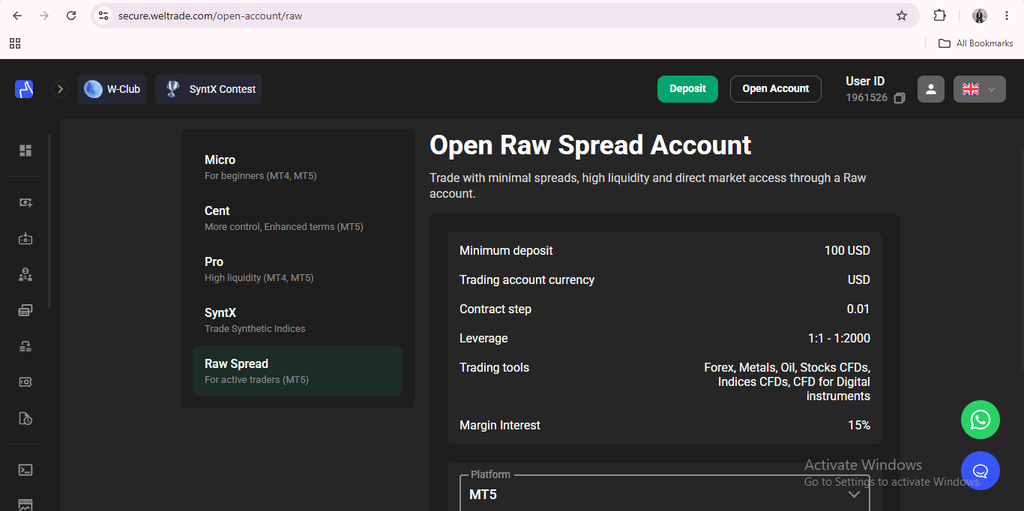
Like Weltrade’s other accounts, Raw Spread starts with a low minimum deposit, so testing it doesn’t require a large upfront commitment. It runs on MT5, meaning setup mirrors the process for SyntX and Pro accounts. You register, fund when ready, and configure your platform from there. If you already have MT5 installed from another Weltrade account, adding a Raw Spread account alongside it takes only a few minutes, and you can run it in parallel with your existing account while you compare execution and costs directly.
Is It the Right Account for You?
The honest test is your trading frequency and strategy, not which account “sounds” the most professional. High-frequency, spread-sensitive strategies benefit clearly from Raw Spread’s tighter pricing. Lower-frequency, longer-term trading usually won’t notice much difference, and the added commission tracking may not be worth the complexity.

If your strategy depends on tight spreads and fast execution, open a Weltrade Raw Spread account and see how the pricing compares to what you’re used to.