Funding an account and eventually pulling money back out should be the simplest part of trading but every broker handles it slightly differently, and knowing what to expect on Weltrade before you start avoids unnecessary confusion later. When you deposit funds into a trading account, the money becomes part of your available account balance, while withdrawals reduce the funds held in the account. BabyPips provides a useful explanation of how deposits and account balances work in a forex trading account.

If you have do not have a Weltrade account already, you can create one here in under ten seconds.
Deposit Methods
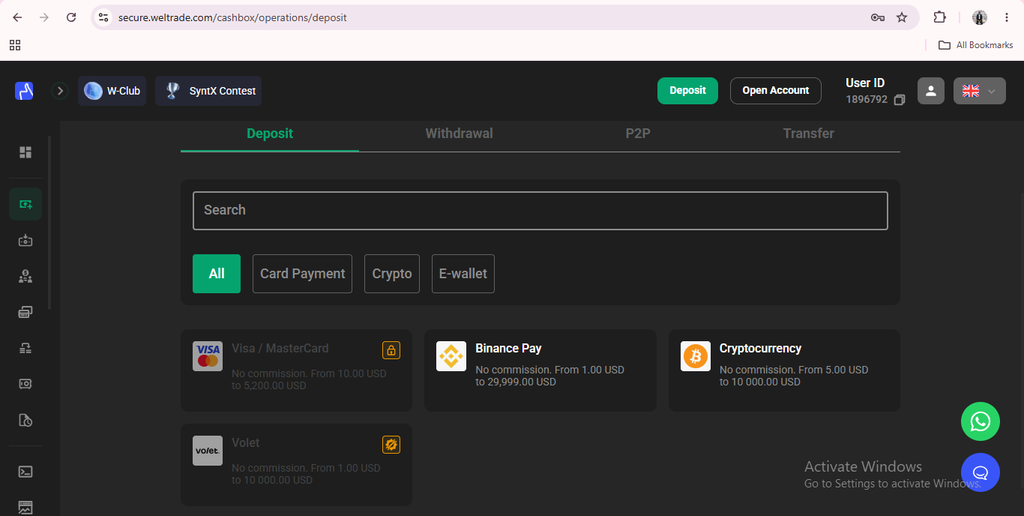
Weltrade supports a wide range of funding options: bank cards (Visa and Mastercard), bank wire transfers, e-wallets like Skrill and Neteller, cryptocurrencies including Bitcoin and USDT, local payment methods depending on your region, and P2P transactions through payment agents. Which options appear in your account depends on your country.
Minimum Deposit and Fees
The minimum deposit amount varies by payment method, with several electronic options starting as low as $1. Weltrade itself doesn’t charge deposit fees. Any additional cost comes from the payment provider, and that fee, if applicable, is shown clearly before you confirm the transaction. Deposits typically must come from a payment method registered in your own name; third-party deposits aren’t accepted for compliance reasons. Keeping your deposit and withdrawal methods consistent with your own identity from the start avoids compliance friction later. You can learn more on Weltrade SyntX Minimum Deposit. How much do you need?
Processing Times
Card and e-wallet deposits are usually credited within minutes. Bank wire transfers take longer, generally one to three business days depending on your bank. Cryptocurrency deposits depend on network confirmation times but are often reflected quickly once confirmed on-chain.

Withdrawal Methods and Minimums
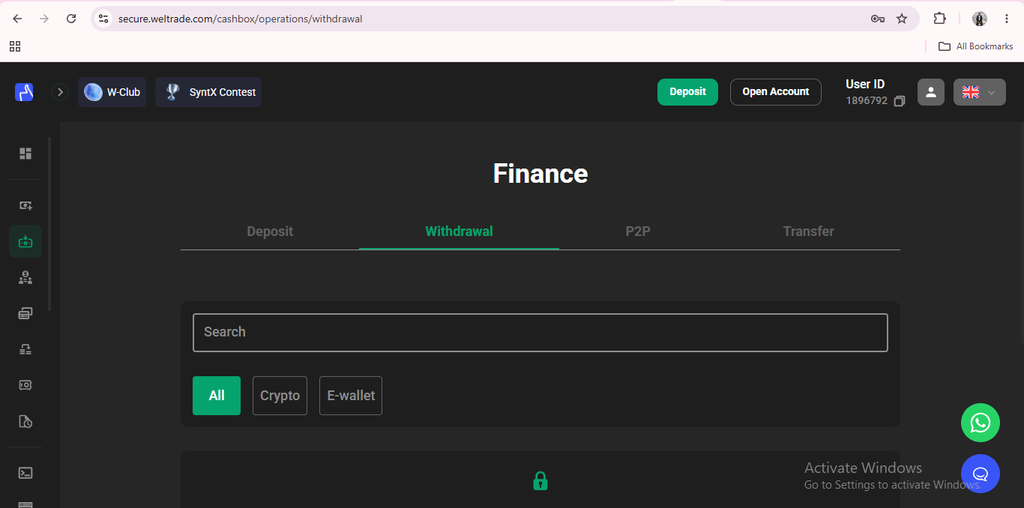
Withdrawals generally need to go back out through the same method used for the original deposit. So a card deposit is withdrawn to the same card, and an e-wallet deposit returns to the same e-wallet. Minimum withdrawal amounts vary by method: e-wallets and select crypto withdrawals can start as low as $1 to $10, while local payment methods and bank transfers sometimes carry higher minimums depending on your region. For the specific process of pulling funds out, see our guide on How to Withdraw Money from Weltrade.
Verification Requirements
Before your first withdrawal, your Personal Profile needs to be fully verified. This typically means confirming your identity documents are on file and matched to your account. Skipping this step ahead of time is the most common reason a first withdrawal gets delayed, so it’s worth completing verification early rather than waiting until you actually want to cash out.

Processing on Weltrade’s Side
Weltrade processes both deposits and withdrawals 24/7 from its own side, meaning your request doesn’t sit waiting for business hours internally. That said, the payment provider’s own processing time still applies on top of that. A card withdrawal, for example, might clear Weltrade’s system quickly but still take additional time to appear on your statement depending on your bank.
Tracking Your Transactions
Every deposit and withdrawal shows up in your Operations History, where you can check the current status of a transaction. A “Pending” status doesn’t mean something has failed, it usually reflects internal processing or provider-side checks still underway. A “Done” status confirms the funds have been sent on Weltrade’s end.

Keeping It Simple
Sticking to one consistent payment method for both deposits and withdrawals tends to be the smoothest approach, since it avoids the friction of needing to match a new withdrawal method to an old deposit. It also simplifies your own record-keeping if you’re tracking deposits and withdrawals for tax or budgeting purposes.
Ready to fund your account? Log in to Weltrade and check which deposit methods are available in your region.

