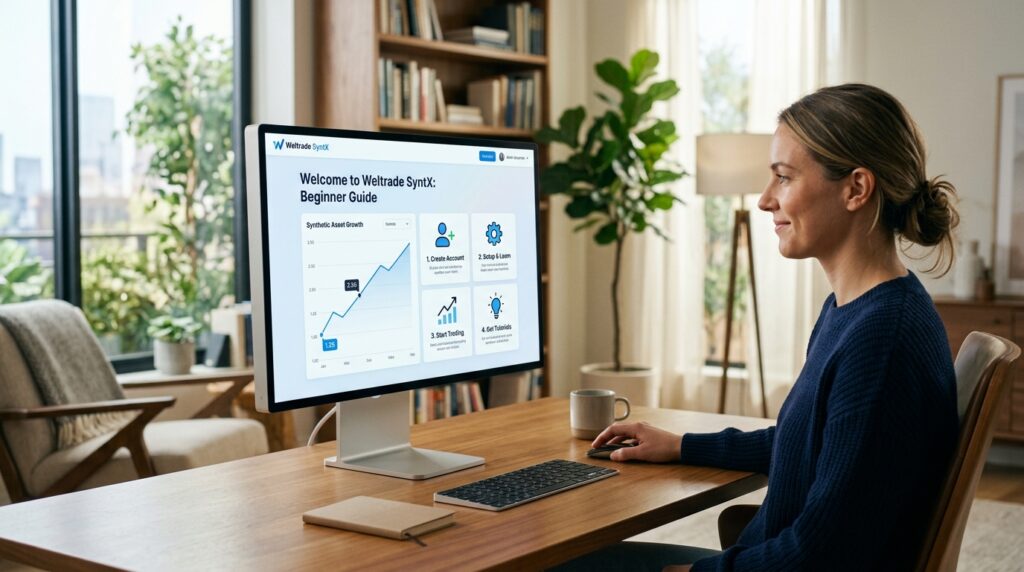
It’s a question worth answering honestly rather than with a marketing-friendly yes: synthetic indices can suit beginners, but only under specific conditions and ignoring those conditions is exactly how “beginner-friendly” markets become expensive lessons. Synthetic indices work differently from traditional financial markets because their prices are generated using mathematical models rather than being driven by actual underlying assets. DailyForex provides an overview of synthetic indices and discusses how their characteristics may affect their suitability for different types of traders.

While you shop around you can quickly create a SyntX account in just 10 seconds here.
What Makes Them Genuinely Approachable
Synthetic indices remove some of the steepest parts of the forex learning curve. There is no economic calendar to interpret, no geopolitical context to track, and no unpredictable news-driven price gaps to account for. For a beginner who finds forex’s information demands overwhelming, that’s a real simplification, letting the focus stay on chart reading and risk management rather than global macroeconomics.

Where the “Beginner-Friendly” Label Breaks Down
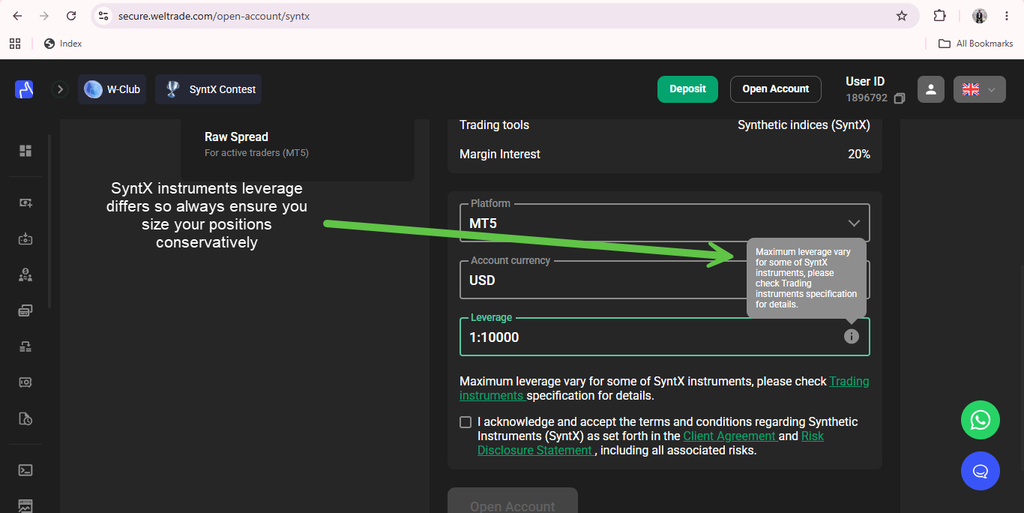
The leverage available on SyntX accounts up to 1:10000 is the significant catch. High leverage doesn’t discriminate between beginners and experienced traders; it amplifies both profits and losses in equal measure. A new trader unfamiliar with disciplined position sizing can lose a meaningful portion of their account far faster on a high-leverage synthetic instrument than on a standard, lower-leverage forex account. For a direct comparison against starting with forex instead, see Synthetic Indices vs Forex: Which Is Better for Beginners?
The Instrument Variety Matters
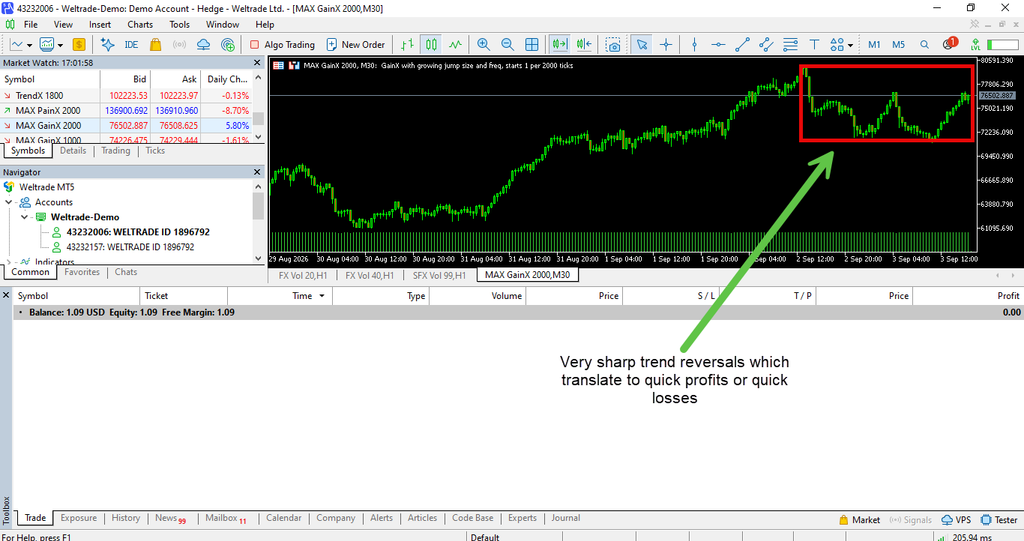
Not every synthetic instrument suits a beginner equally. Calmer, volatility-style or step-style instruments are genuinely reasonable starting points, offering steadier price action that’s easier to read and react to. Crash/boom-style or jump-style instruments, with their sudden, sharp reversals, are considerably less forgiving and better suited to traders who’ve already built some familiarity with synthetic markets generally. Just in case you can not see all the instruments check the article Why Are Weltrade SyntX Symbols Missing on MT5?
What Actually Determines Suitability
Suitability isn’t really about the instrument category, it’s about whether the trader approaches it with appropriate preparation: time spent on a demo account first, conservative position sizing relative to leverage available, and consistent stop-loss use from the very first live trade. A prepared beginner on a high-leverage instrument is in a fundamentally different position than an unprepared one, even trading the exact same chart.


A Reasonable Path In
For beginners genuinely interested in synthetic indices, a sensible approach looks like this: start on demo, choose a calmer instrument family first, size positions well below what the leverage technically allows, and treat the first several weeks as pure learning rather than expecting consistent profit. Rushing any of these steps is where the “beginner-friendly” framing tends to fall apart in practice.

Setting Realistic Expectations
No trading instrument is inherently risk-free, and synthetic indices are no exception despite their simplified information demands compared to forex. Approaching them with the same seriousness and risk discipline you’d apply to any leveraged product is what actually determines whether they suit you as a beginner. The instruments themselves aren’t the deciding factor, the habits you bring to trading them are, and that’s true whether you start with synthetic indices, forex, or any other leveraged product.
Ready to start the right way? Open a Weltrade SyntX demo account and build good habits before trading live.