It’s a question worth asking honestly before depositing a single dollar: what’s the actual downside here? The direct answer is uncomfortable but important, potentially all of it, and in specific circumstances, more than your original deposit. The amount a trader can lose depends on factors such as position size, leverage, margin requirements and the account’s applicable loss protections. BabyPips’ risk disclosure explains how leverage can magnify losses and why traders should understand their potential exposure before trading.

To create your own Weltrade account in just 10 seconds click here.
The Basic Answer: Your Full Deposit Is at Risk
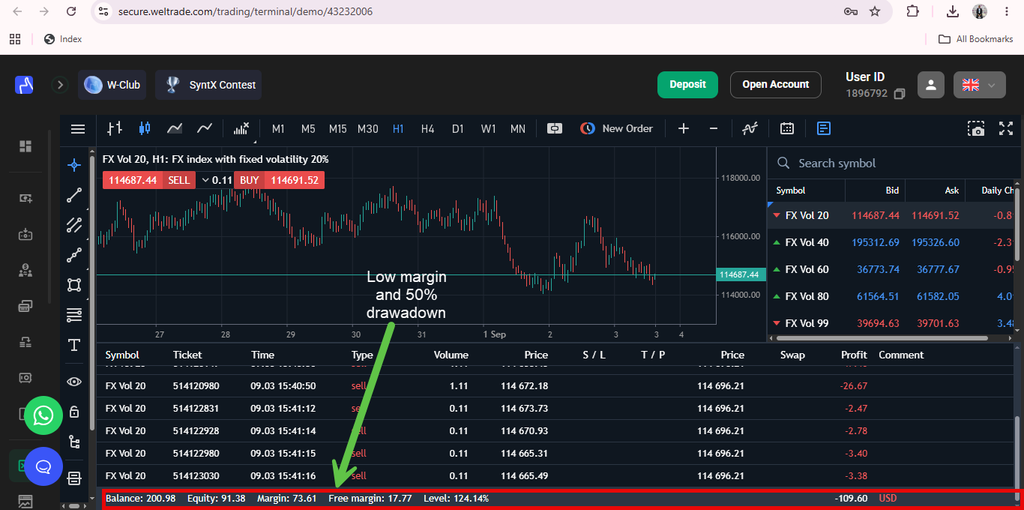
Like any leveraged trading account, a SyntX account can lose its entire balance if positions move against you and aren’t protected by stop-losses. This isn’t unique to synthetic indices, it’s true of leveraged forex, CFDs, and most derivative trading products, but the high leverage available on SyntX specifically makes that outcome achievable faster than on lower-leverage accounts.
How Leverage Accelerates Losses
Because SyntX leverage runs up to 1:10000, a relatively small adverse price movement can represent a large percentage loss relative to your margin. A position sized aggressively against a small account balance can be wiped out by a single sharp move, precisely the kind of move some SyntX instrument families are specifically designed to produce periodically. For practical steps to manage this risk, see our guide on Weltrade SyntX Leverage Explained.

Can You Lose More Than You Deposited?
This depends on your account’s margin call and stop-out policy, along with broader negative balance protection rules that vary by broker and jurisdiction. In many cases, brokers implement automatic stop-out mechanisms that close positions before your account goes negative, but relying on this as your only safeguard is far riskier than managing your own position sizing and stop-losses proactively.

What Actually Determines Your Real Risk
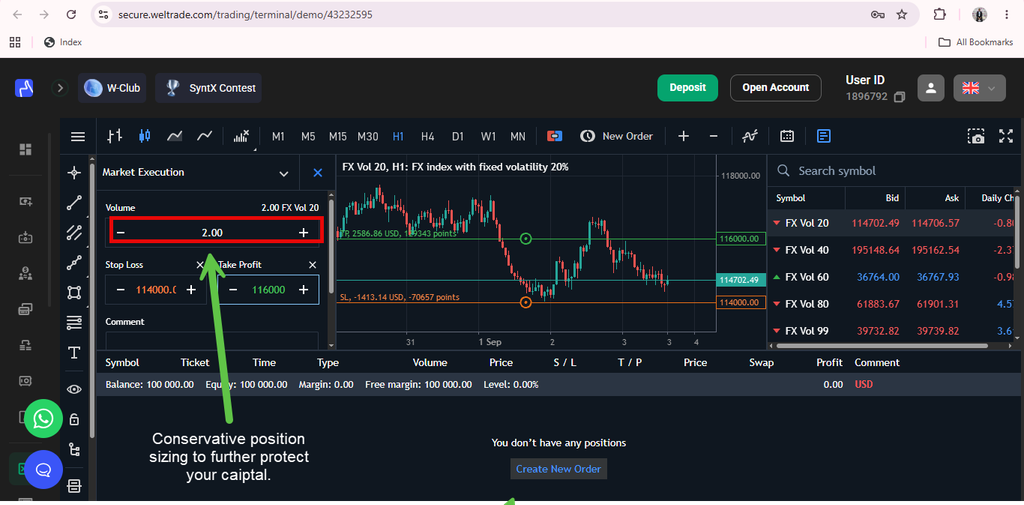
The theoretical maximum loss (your full balance, or worse without protection) is different from your practical, controllable risk. A trader using conservative position sizing, consistent stop-losses, and a leverage level well below the account maximum faces a fundamentally different risk profile than one maximizing leverage on every trade, even though both are technically trading the same account type. Read more on How Synthetic indices generate prices.
Reducing Your Actual Exposure
A few habits meaningfully change your realistic loss potential: always setting a stop-loss before opening a position, risking a small, fixed percentage of your account on any single trade, avoiding the temptation to use maximum available leverage, and testing thoroughly on a demo account before committing capital you can’t afford to lose.
Being Honest About the Risk
There’s no version of this answer that removes risk entirely. Leveraged trading of any kind carries genuine potential for significant loss, and synthetic indices are no exception. Anyone considering SyntX should only trade with capital they’re prepared to lose entirely, treating any potential gains as a bonus rather than an expected outcome. This isn’t meant to discourage trading synthetic indices altogether, it’s meant to set the right frame of mind before you start, so that losses, when they happen, are treated as an expected cost of participating rather than a shocking failure of the strategy.

Managing Risk Responsibly
Understanding the realistic downside is the first step toward trading it responsibly rather than being caught off guard by it.
Ready to practice risk management before trading real capital? Open a Weltrade SyntX demo account and build your habits there first.
