Deriv effectively pioneered synthetic indices trading, so it’s natural that traders comparing Weltrade’s SyntX offering want to know how it stacks up against the original. Here’s an honest comparison across the details that actually matter. Synthetic instruments are designed to replicate characteristics or price behaviour associated with other financial assets without representing ownership of the underlying asset. Investopedia provides a useful explanation of how synthetic assets work and why they differ from traditional assets.

If you would like to explore the two brokers and compare for yourself you can create a Weltrade account here and a Deriv account here.
The Core Concept Is the Same
Both brokers offer algorithm-generated instruments designed to simulate market-like volatility without any connection to a real-world asset, available continuously including weekends. If you understand how one broker’s synthetic indices work, the underlying concept transfers directly to the other. The fundamental idea of random-number-driven pricing isn’t unique to either broker.
Platform Differences
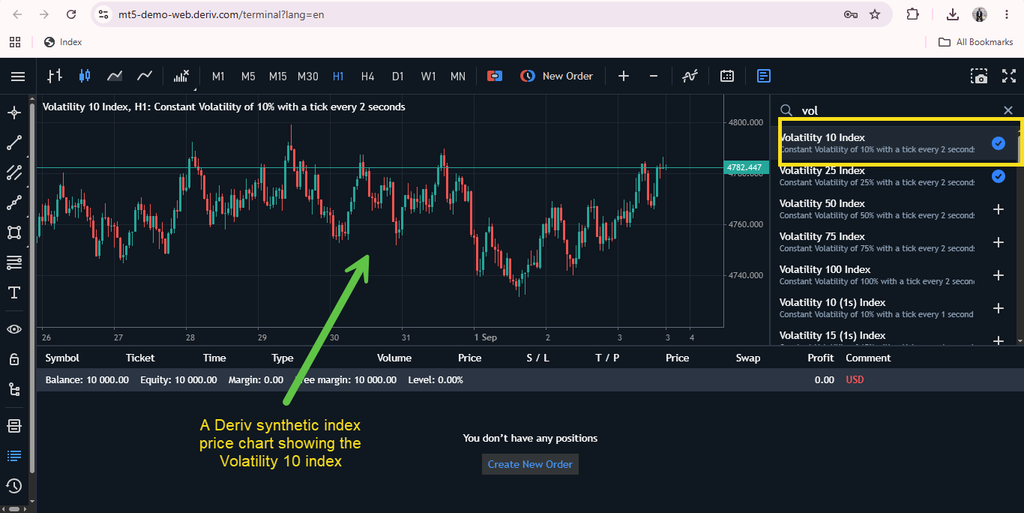
Deriv built its own proprietary trading platforms alongside MT5 support, while Weltrade’s SyntX account runs exclusively on MT5. If you’re already comfortable with MetaTrader’s interface, Weltrade’s approach may feel more familiar out of the gate; if you’re drawn to Deriv’s native charting tools and instrument-specific features, that’s a genuine point of difference worth weighing. You can learn more about it in What are Deriv Trading Platforms.

Instrument Naming and Selection
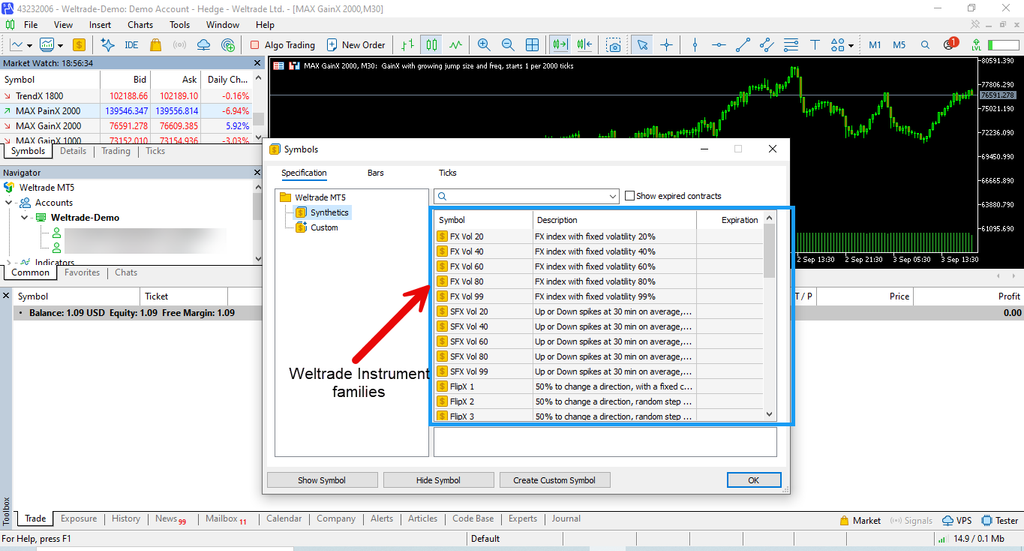
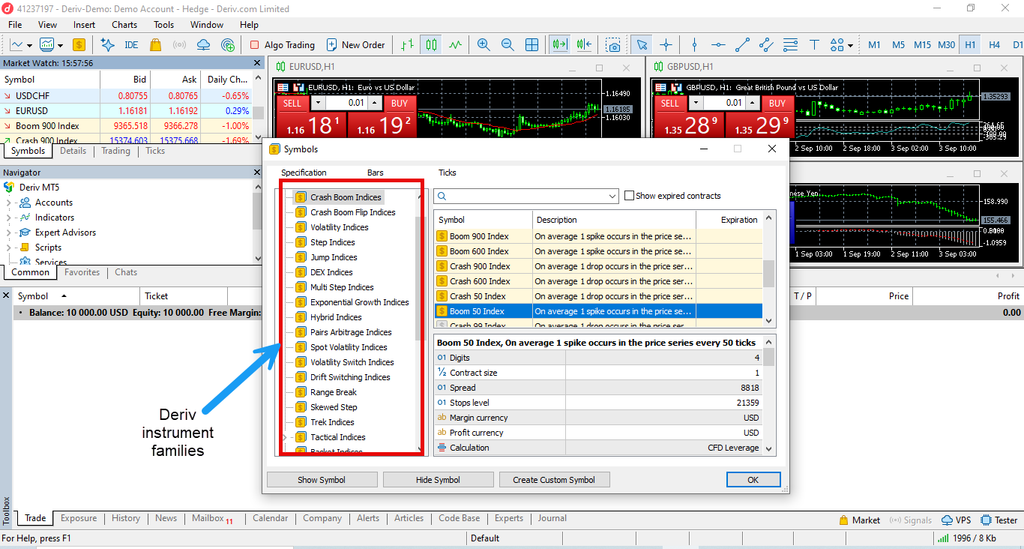
Both brokers organize their synthetic offerings into families with similar underlying concepts, continuous volatility instruments, crash/boom-style instruments with sudden reversals, and step-based instruments, though the specific naming conventions and exact parameter tuning differ between the two. An instrument that “feels” similar on both platforms won’t necessarily behave identically, since each broker calibrates its own algorithms independently.
Leverage and Trading Conditions
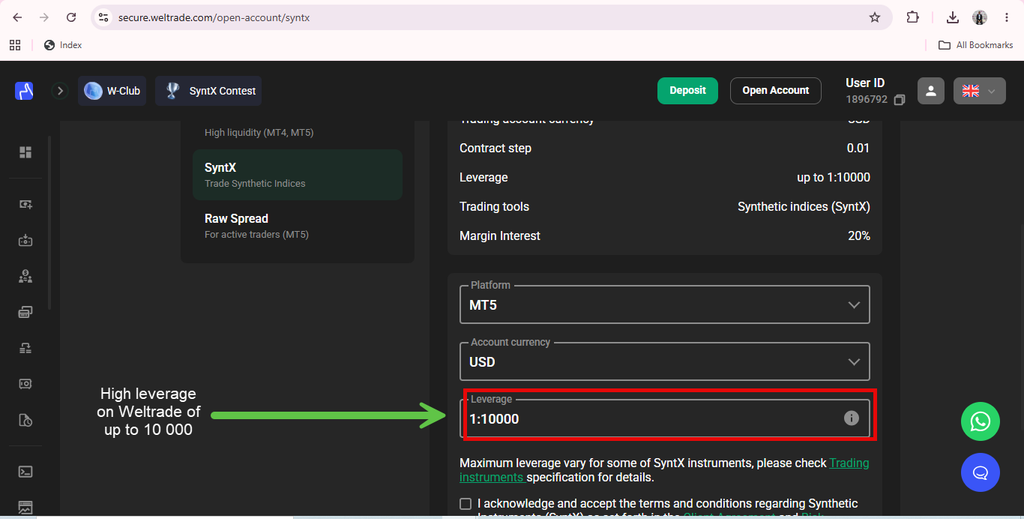
Weltrade’s SyntX leverage runs up to 1:10000, a notably high figure even by synthetic indices standards. Trading conditions, minimum deposits, and spread structures vary between the two brokers, so comparing the actual account specification sheets directly, rather than assuming they’re interchangeable, is worth doing before deciding where to trade.

Regulatory and Broker Considerations
Beyond the instruments themselves, the broader question of broker reputation, regulatory standing, and withdrawal reliability matters just as much as which synthetic indices are on offer. This is true whether comparing Weltrade to Deriv or to any other broker, the instrument category being similar doesn’t mean the surrounding broker experience is equivalent.

Which Should You Choose?
For traders already using Weltrade for other account types, SyntX offers a way to explore synthetic indices without opening an account elsewhere. For traders specifically drawn to Deriv’s platform ecosystem or particular instrument selection, that familiarity might outweigh the convenience of staying with a single broker. Neither is objectively superior. The right choice depends on which platform, leverage structure, and broader trading conditions fit your existing setup.

Making an Informed Comparison
Rather than assuming similarity based on the shared “synthetic indices” label, testing both on demo accounts is the most reliable way to judge which actually suits your trading style. Pay attention not just to how the charts look, but to how the whole experience feels for example platform responsiveness, how intuitive the order process is, and how clearly trading conditions are disclosed since those practical details often matter more day-to-day than the instrument selection itself. For more on how Weltrade’s SyntX account specifically works, see our guide on What Is the Weltrade SyntX Account.
Curious how Weltrade’s version compares in practice? Open a Weltrade SyntX demo account and test it against what you already know.


