The terms “synthetic indices” and “volatility indices” get used almost interchangeably in trading communities, which understandably causes confusion. Here’s how they actually relate to each other. Synthetic indices are a broader category of algorithmically generated instruments, while volatility indices are a specific type designed around defined volatility characteristics. ThinkMarkets explains how synthetic indices work and how different volatility-based instruments are structured.

Since all these are found on Weltrade you will need to create an account to have a full experience.
Volatility Indices Are a Type of Synthetic Index
Rather than being two separate categories, volatility indices are actually one specific family within the broader synthetic indices umbrella. “Synthetic indices” is the general term covering all algorithm-generated instruments including volatility-style, crash/boom-style, step-style, and jump-style instruments. “Volatility indices” specifically refers to the subset designed to simulate continuous, forex-like price fluctuation at a fixed intensity level.
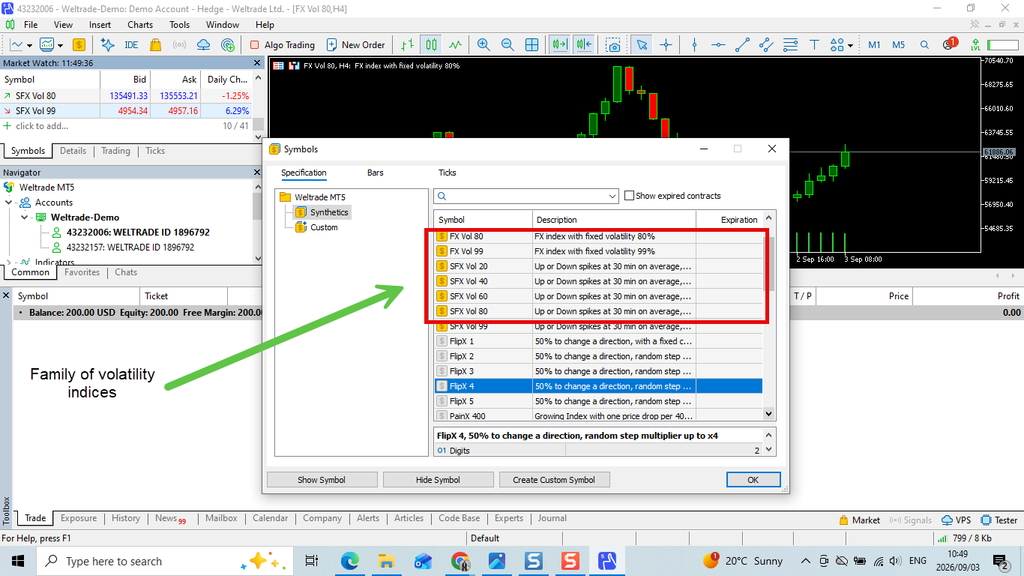
Why the Terms Get Confused
Volatility-style instruments tend to be the most commonly traded and most heavily marketed synthetic instruments, since their behavior most closely resembles familiar forex-style charts. Because they’re often the entry point for new traders, “volatility indices” sometimes gets used loosely to describe the entire synthetic indices category, even though technically it’s just one branch of it.

What Sets Volatility Indices Apart Specifically
Within the broader synthetic category, volatility indices are defined by a fixed, continuous level of price fluctuation intensity. Some are calmer, some noticeably more active, but all maintain a relatively steady character rather than the sudden reversals of crash/boom-style instruments or the incremental steps of step-style instruments. This consistency is part of why they’re often considered a more approachable starting point. For how these instruments are built in the first place, see How Do Weltrade Synthetic Indices Generate Prices.
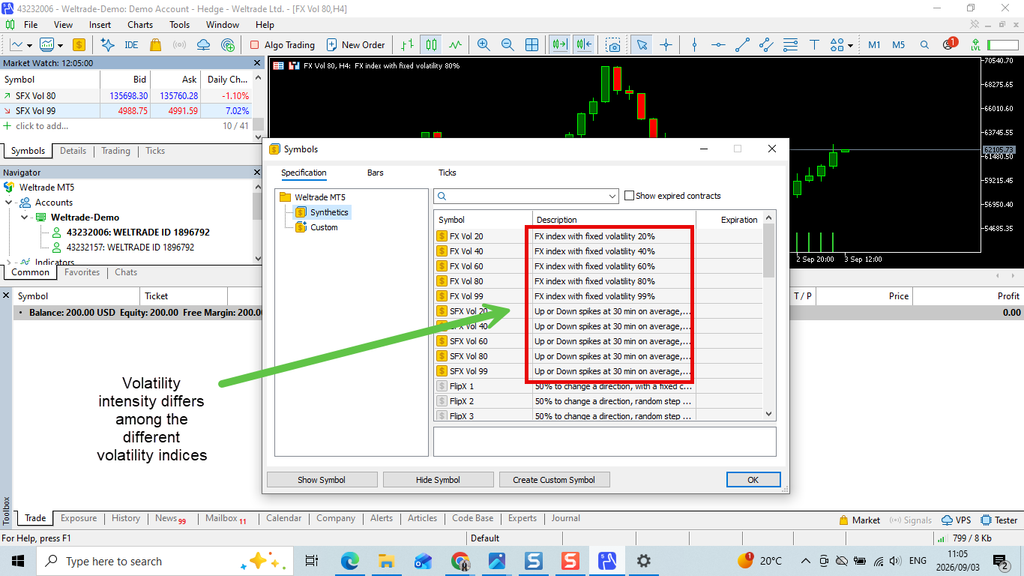
How This Affects Instrument Selection
Understanding this distinction matters practically because “I want to trade synthetic indices” and “I want to trade volatility indices specifically” can lead to genuinely different trading experiences. A trader expecting the steady, forex-like behavior of volatility indices might be caught off guard by the sudden reversals characteristic of crash/boom-style instruments, despite both technically falling under “synthetic indices.”

Choosing Based on What You Actually Want
If your interest is specifically in steady, continuous price action without sudden shocks, volatility indices are the right family to focus on. If you’re comfortable with, or specifically interested in, sharp, unpredictable reversals, the crash/boom-style instruments within the broader synthetic category might suit you better, even though they’re not technically “volatility indices” in the strict sense. For the full breakdown of every instrument family available, see our guide on Complete List of Weltrade SyntX Instruments,

Getting the Terminology Right
Being precise about which family you’re actually referring to helps when researching, comparing brokers, or discussing strategy with other traders “synthetic indices” and “volatility indices” aren’t wrong to use interchangeably in casual conversation, but knowing the actual relationship avoids confusion when it matters. Particularly when researching a broker’s specific offering, where the exact instrument family available can differ significantly from what the general terminology implies.
Curious to explore both categories yourself? Open a Weltrade SyntX account and compare volatility-style instruments against the rest of the lineup.

