Before picking a synthetic instrument to trade, it helps to actually know what’s on the menu. SyntX groups its instruments into several distinct families, each with a different personality and here’s a rundown of what you’ll find. Synthetic indices are different from traditional financial instruments because their prices are generated algorithmically rather than being linked to an underlying real-world market. ThinkMarkets’ Help Centre provides a useful explanation of how synthetic indices work and what makes them different from conventional markets.

For better context as you read this guide ensure you login into your Weltrade Account or create one here.
Volatility-Style Instruments
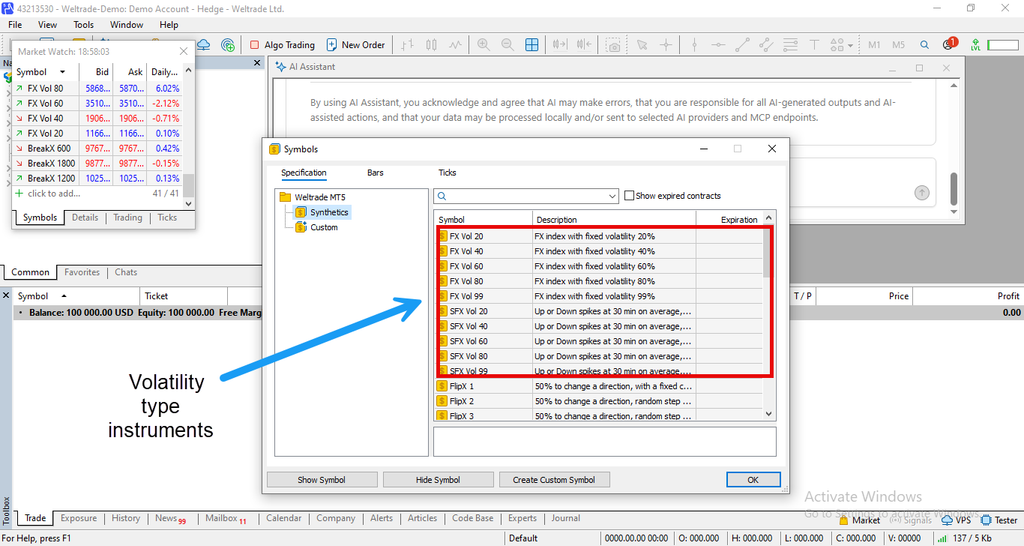
The largest and most commonly traded group is designed to mimic continuous, forex-like volatility at fixed intensity levels. These instruments move constantly, with the intensity of price swings varying by index some are calmer and better suited to beginners, while others are noticeably faster-moving and better suited to traders comfortable with sharper price action.
Crash and Boom-Style Instruments
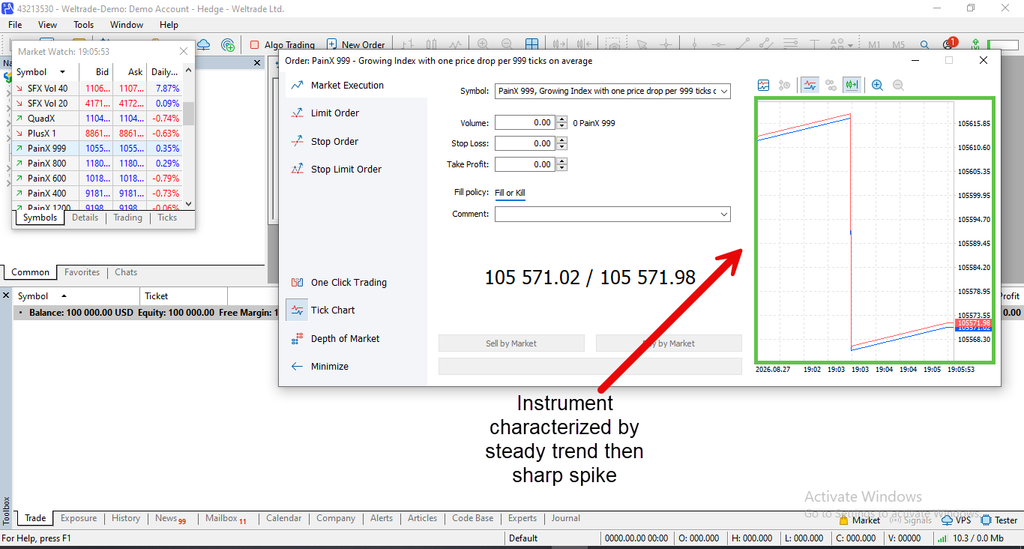
A separate family is built around a generally steady trend punctuated by sudden, sharp reversals at semi-regular intervals, a steady climb interrupted by a sudden drop, or vice versa. These instruments reward patience during the steady phase and disciplined stop-loss placement to survive the occasional sharp move. For a broader look at what makes these instruments tick, see our guide on What Are Synthetic Indices on Weltrade.
Step-Style Instruments
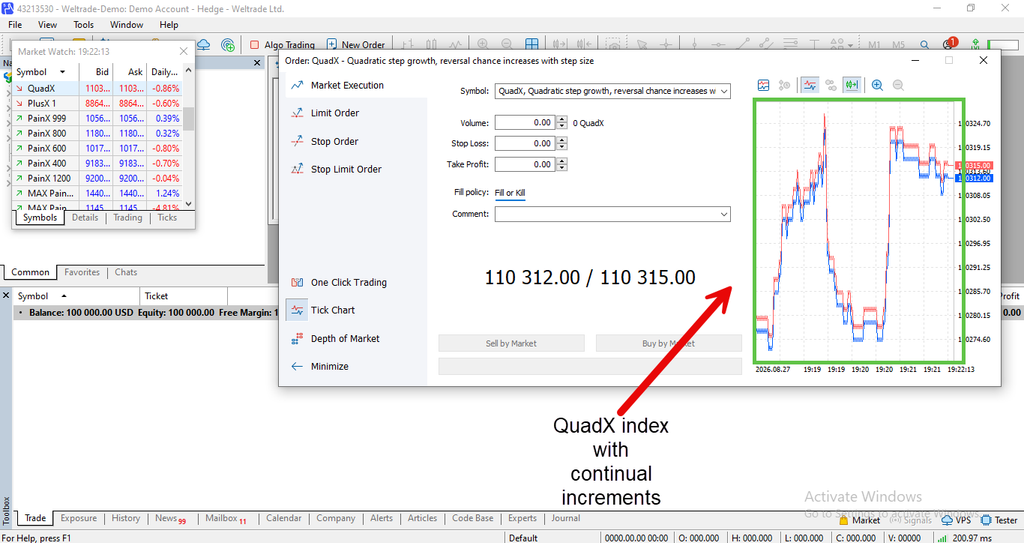
Another group moves in small, consistent increments rather than continuous fluctuation, producing a distinctive stair-step price pattern. These tend to be more predictable in their day-to-day behavior, which makes them a reasonable starting point for traders still building confidence.
Jump-Style and Range-Bound Instruments
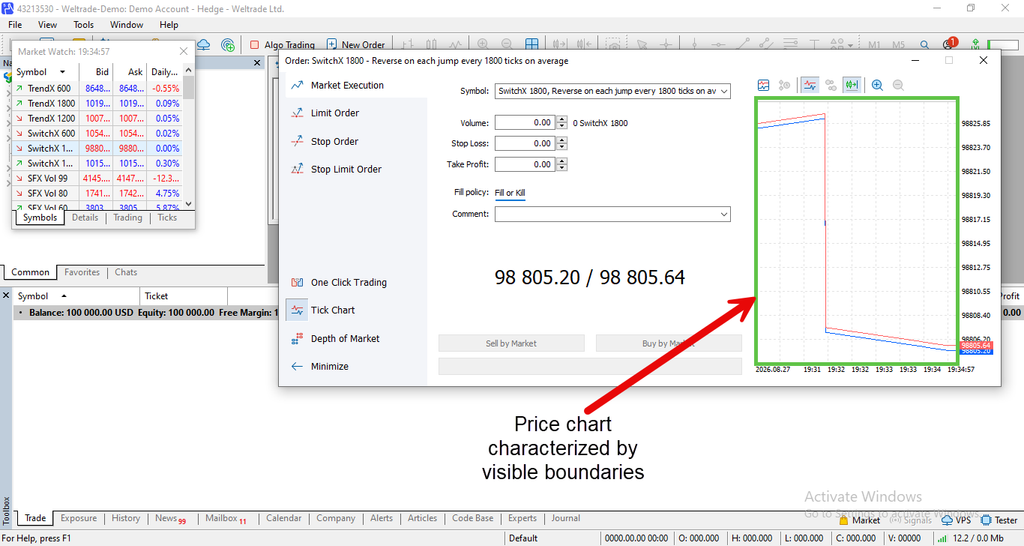
Rounding out the lineup are instruments built around randomized jumps at set intervals, along with range-bound options that oscillate within defined boundaries rather than trending persistently. These generally require the most familiarity to trade well, since their behavior differs the most from traditional forex patterns.
Where to Find the Full List in MT5
Inside MT5, the complete SyntX instrument list is visible in the Market Watch panel once you’re logged into a SyntX account right-click and select “Show All” if you don’t see the full set initially. Each instrument’s specification sheet, accessible from the same panel, lists its contract size, typical spread, and other trading conditions worth reviewing before placing your first trade on it.

Picking the Right Instrument for You
With this many options, the temptation is to jump straight to the most dramatic-looking chart. A better approach is matching the instrument to your risk tolerance and experience level. Calmer volatility-style or step-style instruments for beginners, and the crash/boom or jump-style instruments once you’ve built familiarity with how synthetic markets move in general. It’s also worth revisiting your choice periodically rather than treating your first pick as permanent. As your comfort with the platform grows, moving between families is a normal part of developing a broader synthetic indices strategy.

Building Familiarity
Since each instrument family behaves differently enough to require its own learning curve, testing a few on a demo account before committing real capital is worth the time it takes.
Curious to explore the full instrument list yourself? Open a Weltrade SyntX account and browse the Market Watch panel in MT5.


