Every trade carries a cost, and on SyntX accounts, understanding exactly how that cost is structured helps you judge whether a strategy is actually profitable after accounting for it. The spread is the difference between the bid and ask prices and can form part of the cost of entering and exiting a position. BabyPips explains how spreads work and why the bid-ask spread is considered a transaction cost.

Opening a weltrade account takes less than 10 seconds. You can create yours here.
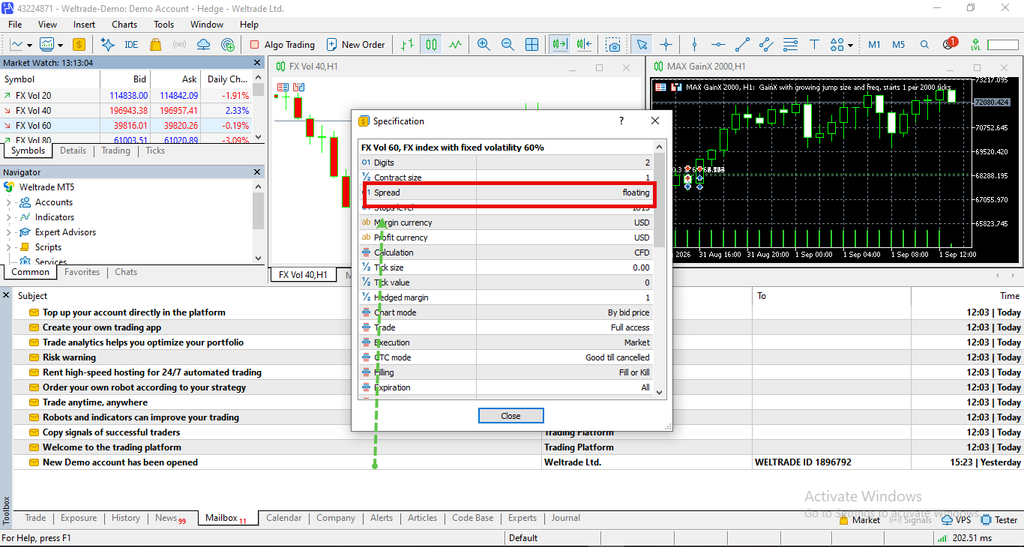
Floating Spreads, Not Fixed
Unlike accounts that advertise a locked-in spread regardless of market conditions, SyntX spreads float. The spread you see on an instrument can widen or tighten depending on market activity, so the number you see right now isn’t guaranteed to hold from one moment to the next. That’s worth knowing upfront: a strategy that assumes a constant, predictable cost per trade may be working off the wrong number if it doesn’t account for spread movement.

This isn’t necessarily a downside, floating spreads can tighten during calmer conditions , but it does mean the spread shown on an instrument’s specification sheet is a reference point, not a fixed contract term. Checking the live spread in MT5 before entering a trade, rather than relying on a remembered or previously seen figure, gives a more accurate read on your actual cost at that moment.
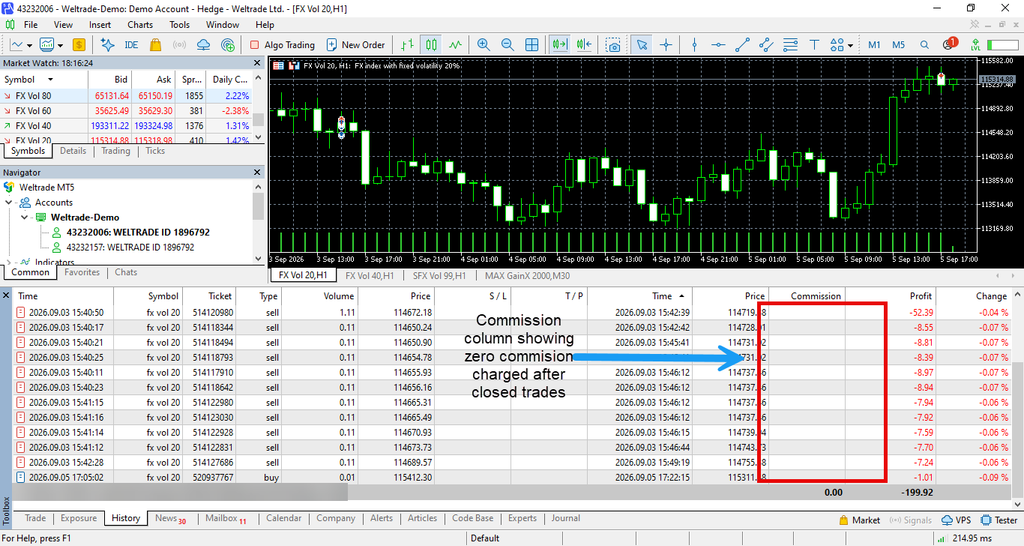
No Added Commission
SyntX accounts don’t charge a separate commission on top of the spread your total trading cost is simply the spread itself. This differs from Raw Spread or ECN-style accounts elsewhere, where a tighter spread often comes paired with a per-lot commission that needs to be factored in separately.
Why Spreads Vary by Instrument
Not every SyntX instrument carries the same spread. Instruments with higher typical volatility or larger average price swings tend to have wider spreads than calmer, more predictable instruments. This is even more amplified during high volume trading times. Each instrument in the syntx list has floating spread meaning that it is not fixed but very much dependent on trading volumes. For more on how SyntX costs compare to standard forex accounts, see our guide on Weltrade SyntX vs Forex: What’s the Difference,
How Spread Actually Affects Your Trade
The spread is essentially a small built-in cost you pay the moment you open a position. Your trade needs to move in your favor by at least the spread amount before it turns profitable. For short-term or high-frequency strategies, this cost compounds meaningfully across dozens of trades, making it worth factoring into your strategy’s expected profitability rather than an afterthought. For the full account specification, see What Is the Weltrade SyntX Account.

Comparing Cost to Other Account Types
Since both SyntX and Weltrade’s standard forex accounts use floating spreads, the real differentiator between them isn’t predictability, it’s typical spread size and how much each moves under pressure. SyntX instruments are priced using Weltrade’s own algorithm rather than tracking real market liquidity, so their spread behavior doesn’t necessarily follow the same patterns as forex spreads widening around news releases; it’s worth treating them as a separate cost profile rather than assuming SyntX behaves like a calmer version of forex.
In practice, this means the trade-off isn’t “predictable SyntX vs. variable forex”. It’s comparing the typical spread range and volatility of the specific SyntX instrument you’re trading against the specific forex pair you’d otherwise trade, and judging costs on those individual numbers rather than the account type alone. Checking the specification sheet for both before committing to a strategy is the only way to know which is actually cheaper for your intended trade frequency.
Factoring Costs Into Strategy
Before committing to a strategy on any SyntX instrument, it’s worth running a quick mental check: does the strategy’s expected edge comfortably clear the fixed spread cost, especially at your intended trade frequency? Strategies that only work with zero transaction costs rarely hold up once real spreads are applied. Backtesting or demo-testing a strategy while explicitly accounting for the instrument’s actual fixed spread, rather than assuming frictionless execution, gives a far more honest picture of whether it’s genuinely profitable before any real capital is committed to it.

The Bigger Picture
Understanding cost structure is as important as understanding an instrument’s volatility when building a strategy.
Curious what the actual spreads look like across the instrument list? Open a Weltrade SyntX account and check the specification sheet for yourself.


