Lot sizing is one of those details that seems minor until it’s the reason a position was far larger, or smaller, than intended. Here’s how lot sizes actually work on SyntX instruments. A lot is a standardised unit used to describe the size of a trading position, although the amount represented by one lot can vary between financial instruments. BabyPips explains how lots, leverage and position size work in forex trading.

If you have not yet, you can create your Weltrade account here in just ten seconds.
What a Lot Actually Represents
A lot is a standardized unit of trade volume. On forex, a standard lot typically represents 100,000 units of the base currency, with mini and micro lots representing fractions of that. Synthetic indices use the same general lot concept, but the underlying contract size and value per lot vary by instrument, since there’s no standard currency pair to base the calculation on.

Why Lot Sizes Differ Between Instruments
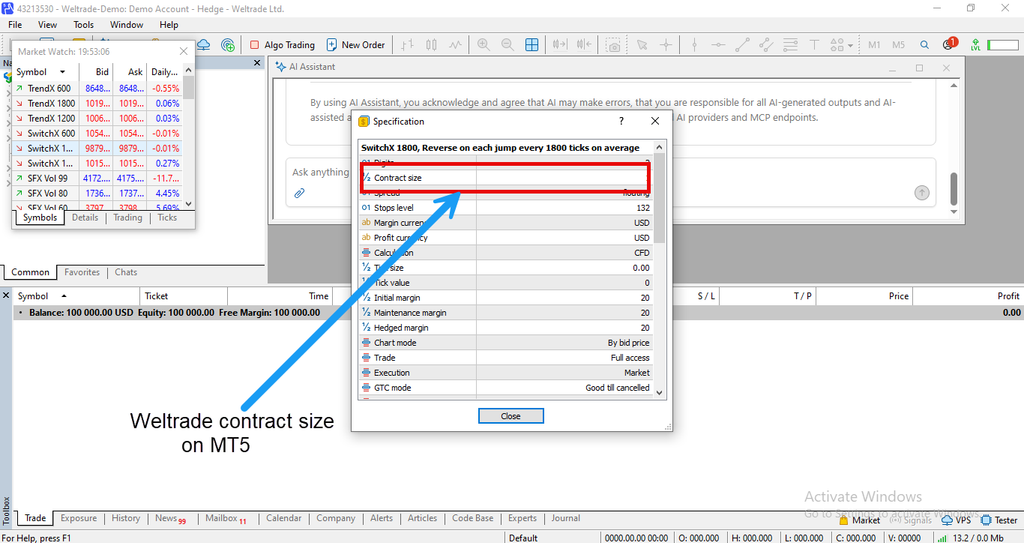
Because each SyntX instrument family has its own designed volatility and contract specification, the dollar value of a single pip or point movement varies from one instrument to the next. A 0.01 lot position on a high-volatility crash/boom-style instrument might represent meaningfully different real dollar risk than the same 0.01 lot size on a calmer, range-bound instrument. Checking the specific instrument’s contract specification in MT5 before sizing a position is the only reliable way to know the actual value at stake. For the full instrument breakdown, see Complete List of Weltrade SyntX Instruments.
Minimum and Maximum Lot Sizes
Most SyntX instruments let you trade very small amounts, often as low as 0.01 lots, so you can get started even with a small account balance. There are also limits on how big a single trade can be, and sometimes on how much you can hold in total for one instrument. These caps are set by the broker as a way to manage risk. For more on how leverage and lot sizing interact, see our guide on Weltrade SyntX Leverage Explained,

Calculating Position Size Correctly
Rather than picking a lot size arbitrarily, a sounder approach works backward from your risk tolerance: decide how much of your account you’re willing to risk on a single trade, determine your stop-loss distance in points, and use the instrument’s per-point value to calculate the lot size that keeps your risk within that limit. Several free position-size calculators exist online, or MT5’s built-in risk tools can help with this math directly. Running this calculation before every trade, rather than eyeballing a lot size that feels roughly right, is a small habit that consistently separates disciplined traders from those who discover their real risk exposure only after a loss has already happened.

Why This Matters More on High-Leverage Accounts
Given SyntX’s high available leverage, it’s entirely possible to open a position size that technically fits your margin but represents far more real risk than you intended. Lot sizing is really the practical mechanism through which leverage either stays a useful tool or becomes a liability — getting it right is more important here than on lower-leverage account types.

A Habit Worth Building
Checking an instrument’s contract specification before every new trade, rather than assuming lot sizes behave the same across the entire SyntX lineup, is a small habit that prevents outsized, unintended risk. Ready to practice position sizing without risking capital? Open a Weltrade SyntX demo account and test your calculations first.


