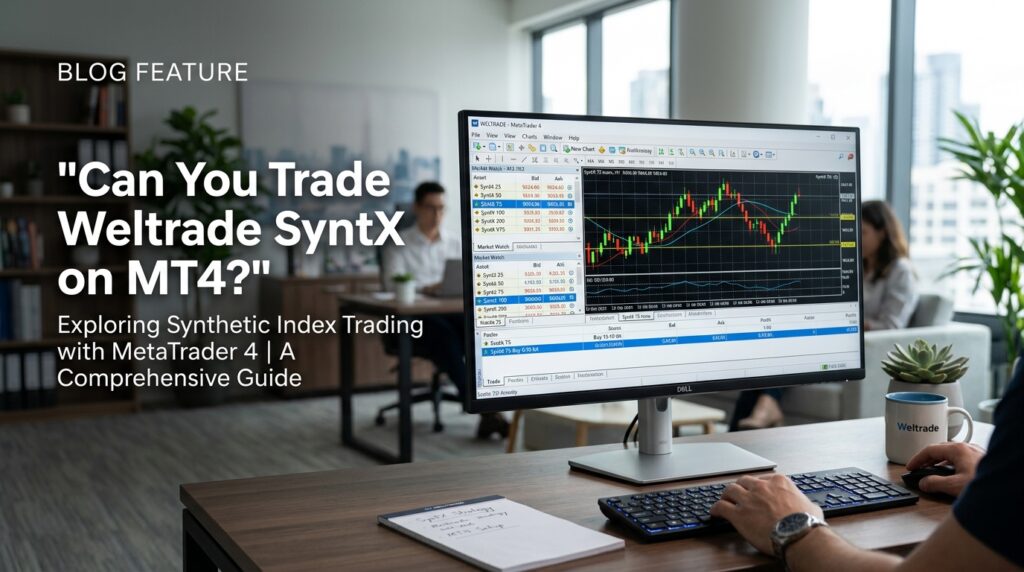
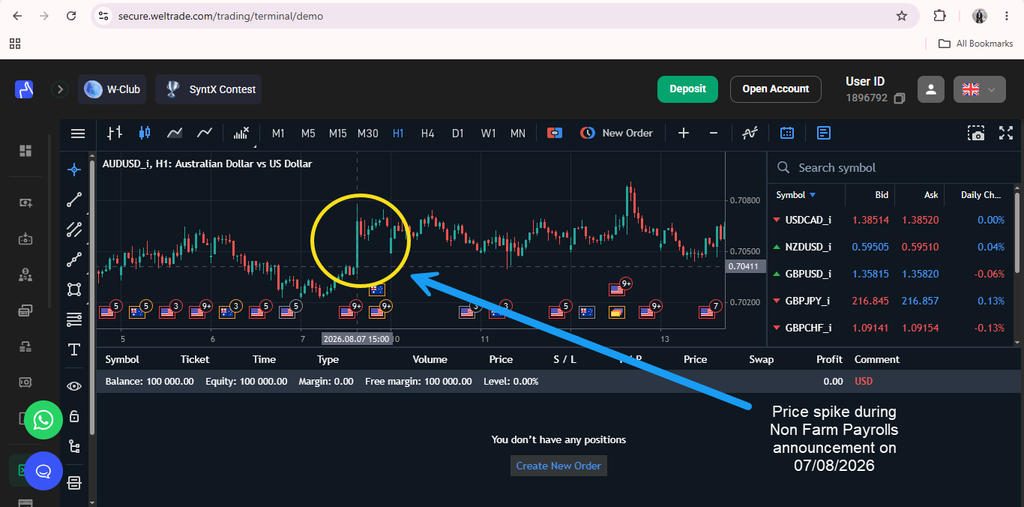
If you’ve traded forex, checking the economic calendar before placing a position is second nature. It’s worth knowing upfront whether that same habit is necessary, or even relevant, when trading synthetic indices. Unlike forex and other traditional markets, synthetic indices are not directly linked to economic data or real-world events. ThinkMarkets explains how synthetic indices are generated and why economic news and central-bank events do not directly affect their prices.

To enjoy full access to Weltrade and its platforms, make sure you create an account here.
The Short Answer: No
Synthetic indices are generated entirely by algorithms, with no connection to real-world economic data, company earnings, or geopolitical events. A central bank interest rate decision, a surprise employment report, or a major political announcement has zero direct effect on SyntX price movement. The pricing engine simply doesn’t take any of that as an input.

Why This Is Fundamentally Different From Forex
Forex prices move because real market participants banks, funds and institutions react to news in real time, adjusting their positions based on new information. Synthetic indices have no equivalent participants reacting to anything; the algorithm’s output is determined by its programmed parameters, not by sentiment or reaction to headlines.

What This Means for Your Research Process
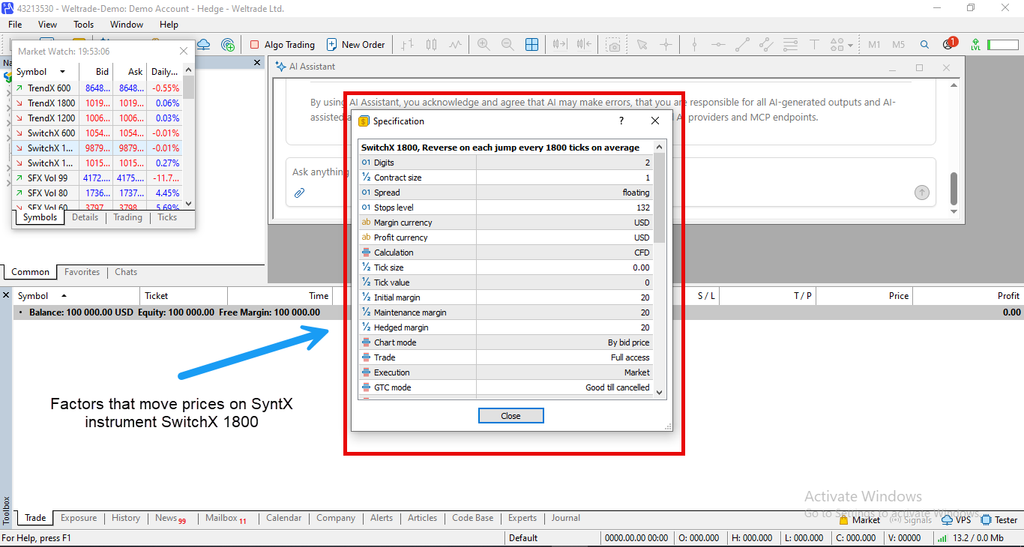
If you’re used to checking an economic calendar before trading, that habit simply doesn’t apply to SyntX. There’s no equivalent “SyntX calendar” to consult, because nothing scheduled in the real world moves these instruments. The research that does matter is understanding each instrument’s own designed behavior, its typical volatility range, how often it reverses, and how sharp its built-in spikes or steps tend to be. For more on how SyntX and forex differ more broadly, see our guide on Weltrade SyntX vs Forex: What’s the Difference?
Does That Make SyntX Safer Than Forex?
Not necessarily, it removes one category of risk (unexpected news-driven volatility) while leaving another fully intact (leverage risk and normal instrument volatility). A sharp move on a crash/boom-style instrument can still happen without warning, it’s just driven by the algorithm’s built-in design rather than a headline. The absence of news risk doesn’t mean the absence of risk generally. And for how prices are actually generated, see How Do Weltrade Synthetic Indices Generate Prices?

A Practical Advantage for Some Traders
For traders who’ve been caught off guard by unexpected news-driven spread widening or slippage on forex positions, SyntX’s complete independence from real-world events is a genuine practical benefit. You can plan a trade around an instrument’s known behavior without worrying that an unscheduled headline will move the market against you mid-position. That said, this only removes news risk specifically. It doesn’t remove the need for a stop-loss, since synthetic instruments can still move sharply against a position for reasons entirely internal to the algorithm’s design.

Adjusting Your Mental Model
If you’re moving from forex to SyntX, the biggest mental shift isn’t learning new news sources. It’s letting go of news-watching entirely and replacing it with instrument-specific pattern familiarity instead. ,
Curious to see how a SyntX chart behaves independent of the news cycle? Open a Weltrade SyntX demo account and watch it during your next major forex news event.